Emergency Roof Repair Jacksonville FL
When water is actively entering a building, the first priority is stopping further intrusion — not completing the final repair. Temporary protection buys time to evaluate the damage properly and plan permanent work.
The short answer
What to know first
Emergency roof work usually falls into two phases. Phase one limits damage: covering the opening, diverting water, and protecting the interior. Phase two is the permanent repair, carried out once conditions are safe and the full extent of the damage is understood. Trying to skip phase one during active weather often makes both the roof and the interior worse.
Call for current emergency availability. Response depends on weather, safe roof access, and how widespread the event is across the area — after a significant storm, many properties are affected at once.
What counts as a roof emergency
Water entering living space, dripping from ceilings or light fixtures, or running down interior walls is an emergency regardless of how small the roof opening turns out to be. Electrical fixtures and panels near active water are a safety issue, and standing water in a ceiling cavity can bring down drywall.
Structural exposure is the other clear emergency: a large area of shingles gone after sustained wind, a limb or debris impact that has punctured the deck, uplifted metal panels, or a membrane that has separated and is holding water. In those cases the roof no longer sheds water and the assembly is taking on moisture with every hour of rain.
Less obvious but still urgent situations include a leak over an electrical panel, water tracking into a wall cavity, or repeated intrusion into an occupied bedroom or a room with sensitive contents. When in doubt, describe what you see on the phone and get guidance rather than waiting to see how bad it gets.
Warning signs to watch for
- Water dripping from a ceiling, fixture, or vent during rain
- A visible hole, puncture, or missing section of roof covering
- Large areas of shingles removed by wind
- A tree limb or debris resting on the roof
- Ceiling drywall bulging or sagging with trapped water
- Water running down an interior wall or into a wall cavity
- Metal panels lifted, folded, or detached at the eave
- A low-slope membrane split or separated with water standing on it
Common causes
- Sustained wind and gusts during tropical storms and hurricanes
- Wind-driven rain forced under shingles and behind flashing
- Falling limbs and airborne debris puncturing the covering
- Failed pipe boots or flashing that finally opened during heavy rain
- Clogged drains and valleys causing water to back up and overflow
- Previously patched details that let go under storm loading
How it works
The repair process
A straightforward sequence, with no pressure to replace a roof that can be repaired.
- 1
Call and describe the situation
Where is water entering, how fast, and what is above the affected room? This determines whether temporary protection is the immediate priority.
- 2
Protect the interior while you wait
Move belongings, place containers under active drips, and avoid rooms with sagging ceilings. Do not use electrical fixtures where water is present.
- 3
Temporary protection on the roof
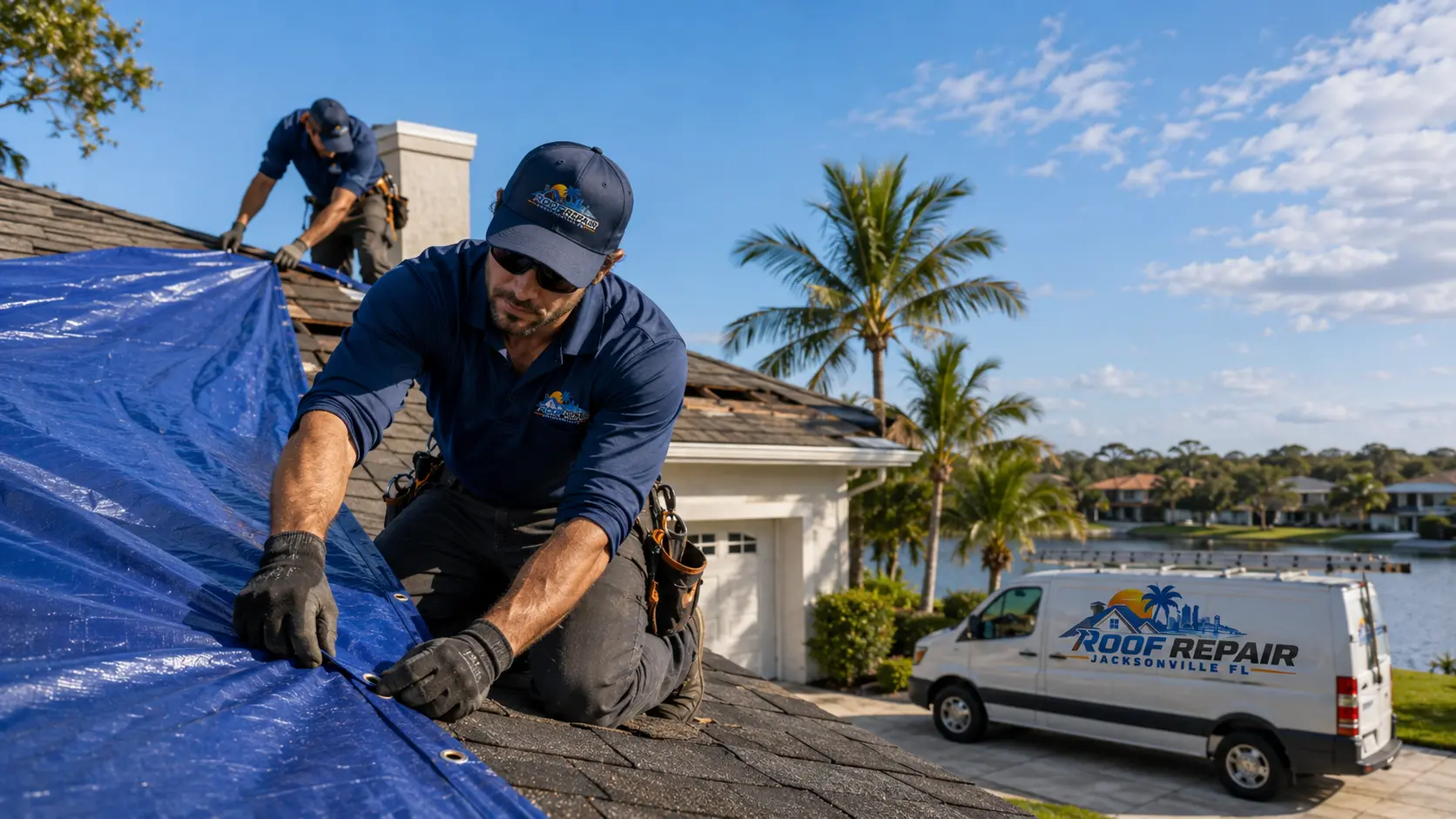
When conditions allow safe access, the opening is covered — commonly with a secured tarp or temporary patch — so the assembly stops taking on water.
- 4
Evaluate and complete permanent repair
Once the roof is dry and stable, the damaged area is assessed and repaired properly, including flashing, underlayment, and decking work if needed.
Roof types this applies to
- Shingle roofs — missing courses and exposed underlayment are covered, then repaired with matching materials.
- Metal roofs — lifted or detached panels are secured, fasteners and closures corrected, penetrations resealed.
- Flat and low-slope roofs — splits, open seams, and failed terminations are temporarily sealed, then repaired.
- Tile roofs — broken tiles and exposed underlayment are protected, with attention to the water barrier beneath.
Jacksonville considerations
Jacksonville sits in a region where tropical systems, strong summer thunderstorms, and occasional severe wind events all put roofs under load. Wind-driven rain is the recurring theme: rainfall arriving nearly horizontally finds gaps that ordinary vertical rain never reaches, which is why a roof can perform for years and then leak badly during one storm.
After a widespread storm, demand for roof help spikes across the whole metro at once, from the beaches through Southside and Arlington. Temporary protection becomes the realistic first step for many properties, with permanent repairs scheduled as conditions allow.
Safety limits matter. Roof access during lightning, active high wind, or on a wet steep slope is not safe for anyone, so emergency work sometimes has to wait for a weather window. Call for current emergency availability and guidance on protecting the interior in the meantime.
What affects the cost
Repair pricing depends on the specifics of the roof, not a flat rate. These are the factors that move it.
- Whether temporary protection is needed before permanent repair
- Size of the opening and how much of the roof is exposed
- Roof height, pitch, and access conditions
- Amount of damaged decking or wet underlayment found
- How many separate areas were damaged in the event
- Materials required to match the existing roof system
For planning ranges, see the Jacksonville roof repair cost guide. Any figure there is a planning estimate, not a quote.
What to do while you wait for help
A few practical steps limit interior damage during an active leak. Contain the water where you can, protect what is valuable, and keep people away from ceilings that are holding weight.
- Place buckets or bins under active drips and lay towels to control splash.
- Move furniture, electronics, and documents out of the affected area.
- Turn off power to fixtures or circuits in the wet area if it is safe to do so at the panel.
- Photograph the damage inside and outside from the ground for your own records.
- Do not climb onto a wet, steep, or storm-damaged roof.
- Stay clear of any downed power lines and treat them as energized.
FAQs
Emergency Roof Repair questions
Do you offer 24/7 emergency roof repair?
Availability varies with weather, safe roof access, and current demand, so specific around-the-clock hours are not advertised here. Call 904-844-0026 for current emergency availability. If water is entering the building, describing the situation on the phone helps determine whether temporary protection is the right immediate step and what you can do to limit interior damage in the meantime.
Is tarping a repair?
No. A tarp or temporary patch is protection, not a permanent fix. It keeps additional water out of the assembly so drywall, insulation, and decking are not soaked further while the damage is evaluated and permanent repair is planned. Temporary protection has a limited service life, especially in Florida sun and wind, so it should be followed by proper repair rather than left in place indefinitely.
Can a roof be tarped during a storm?
Generally not safely. High wind, lightning, and wet slopes make roof access hazardous, and a tarp installed in strong wind rarely stays secured. The practical approach is to protect the interior during the storm and address the roof once conditions allow safe access. Call to discuss the situation and timing.
What if my ceiling is sagging?
Stay out of that area. A ceiling holding pooled water can fail suddenly, and drywall plus water is heavy enough to cause injury. Keep people and pets clear, turn off nearby light fixtures at the breaker if it is safe, and mention the sagging when you call so the urgency is understood.
Will the same crew handle the permanent repair?
The permanent repair is scheduled after the roof is stable and the damage has been evaluated. The scope depends on what is found once the area is opened — flashing, underlayment, and decking are common findings after a storm. You will get an explanation of what failed and what the repair involves before work proceeds.
Related roof repair services
Storm Damage Roof Repair
Storm damage roof repair in Jacksonville, FL after wind, tropical storms and debris impact. Temporary protection and permanent repairs. Call 904-844-0026.
Learn moreRoof Leak Repair
Roof leak repair in Jacksonville, FL. Ceiling stains, attic moisture, pipe boot and flashing leaks located and repaired. Call 904-844-0026 about your roof leak.
Learn moreRoof Repair
Roof repair in Jacksonville, FL for leaks, damaged shingles, flashing failures, storm damage, metal and flat roofs. Call 904-844-0026 to discuss your roof.
Learn moreFlat Roof Repair
Flat roof repair in Jacksonville, FL for membrane damage, ponding water, open seams, penetrations and drainage problems. Call 904-844-0026 to discuss your roof.
Learn moreAreas served
- Southside
- Deerwood
- Baymeadows
- Mandarin
- Bartram Park
- San Marco
- Riverside
- Arlington
- Intracoastal West
- Jacksonville Beach
- Atlantic Beach
- Neptune Beach
Not sure if your address is covered? Call 904-844-0026 and ask.
Discuss your emergency roof repair question
Describe what you are seeing and where, and get clear next steps for the repair.
Call for current availability.