Common Roof Repair Situations
Typical roof problems Jacksonville property owners run into, what causes them, and which kind of repair addresses each one.
Situations, not case studies
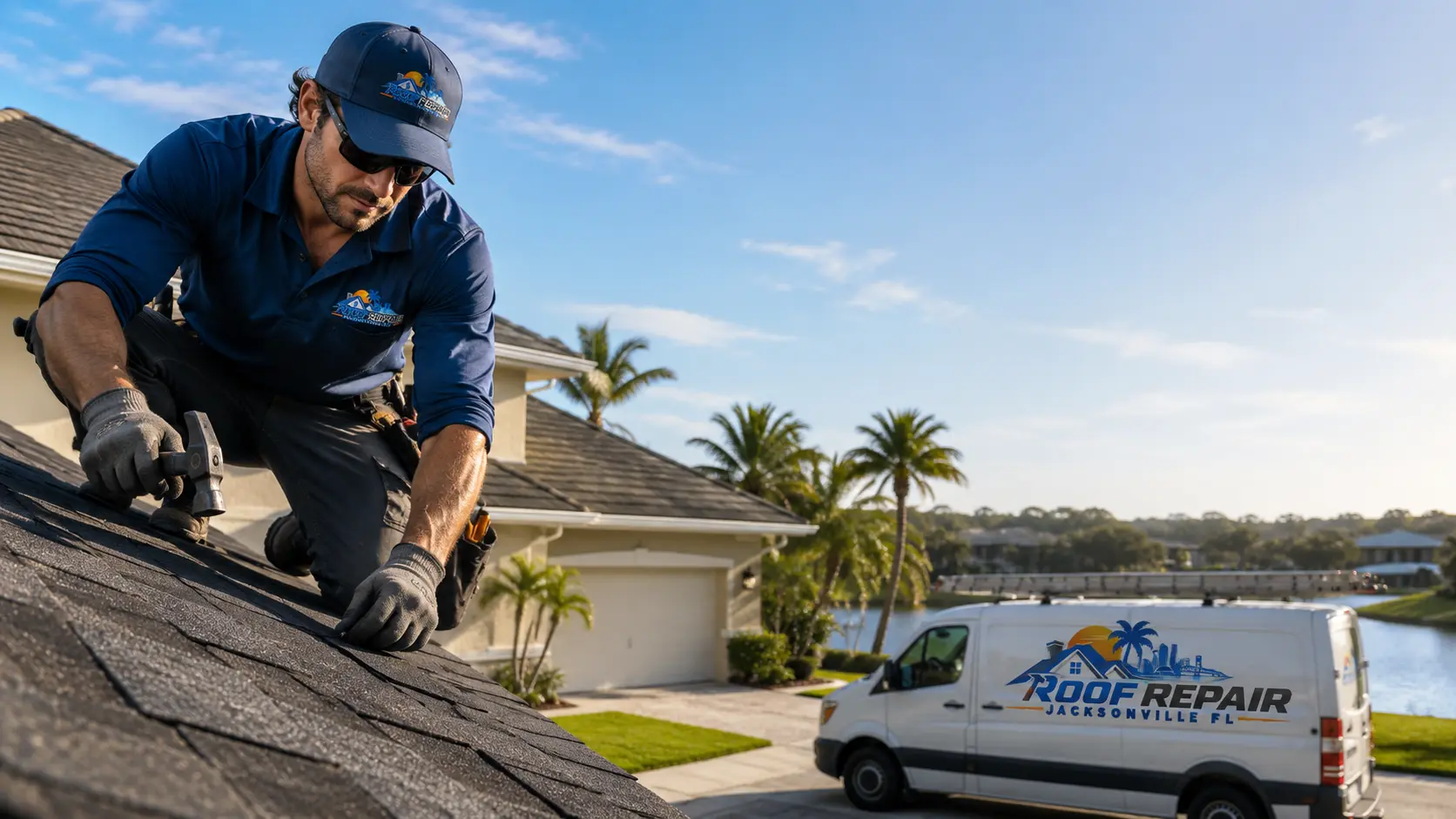
What roof repair work usually looks like
These are representative examples of the problem types that come up most often on roofs in this area. Each links to the service page covering that kind of repair in detail.
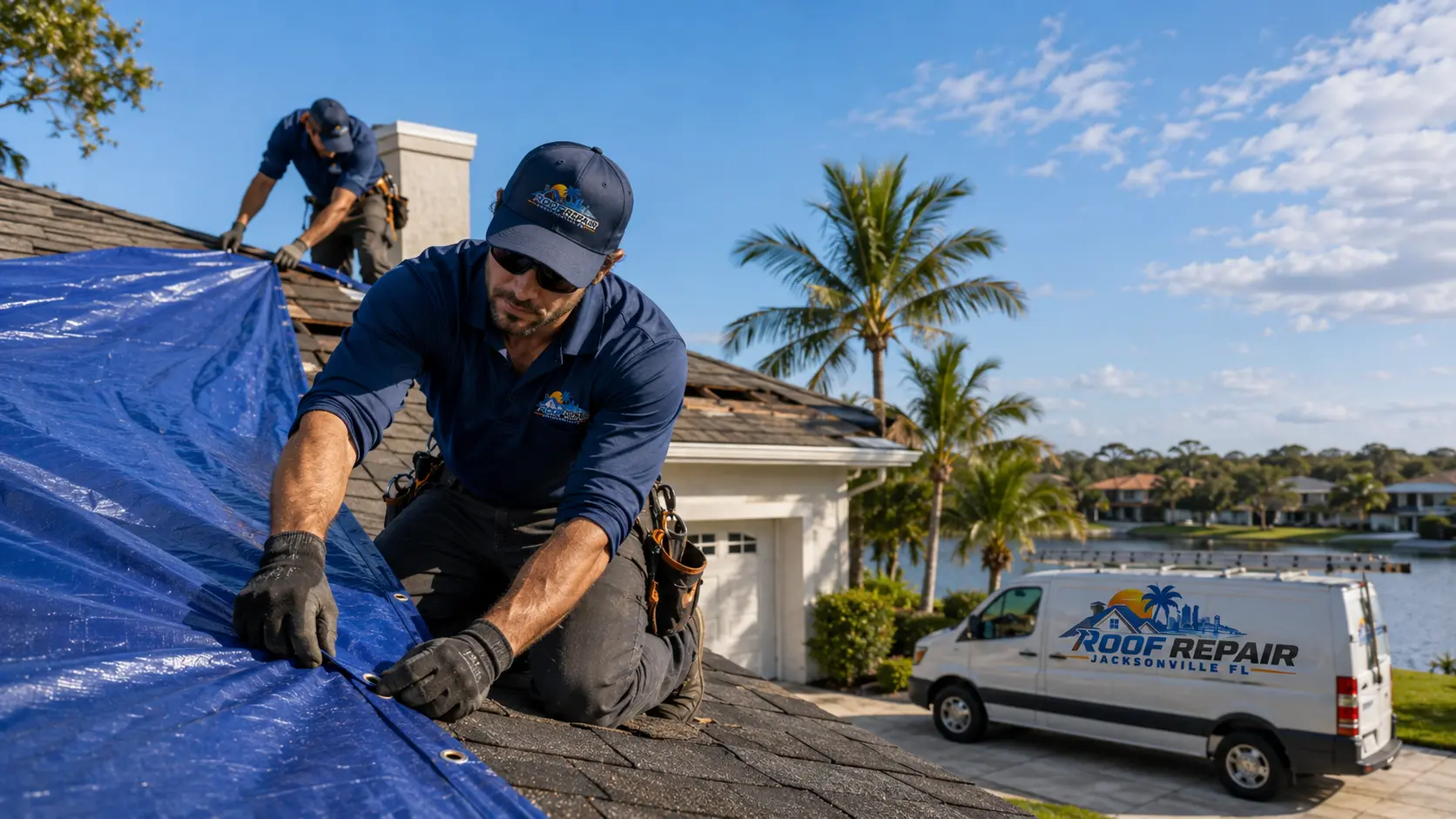
Active leak after a storm
Water entering during a storm, with temporary protection securing the area until conditions allow a permanent repair to the damaged section.
See the service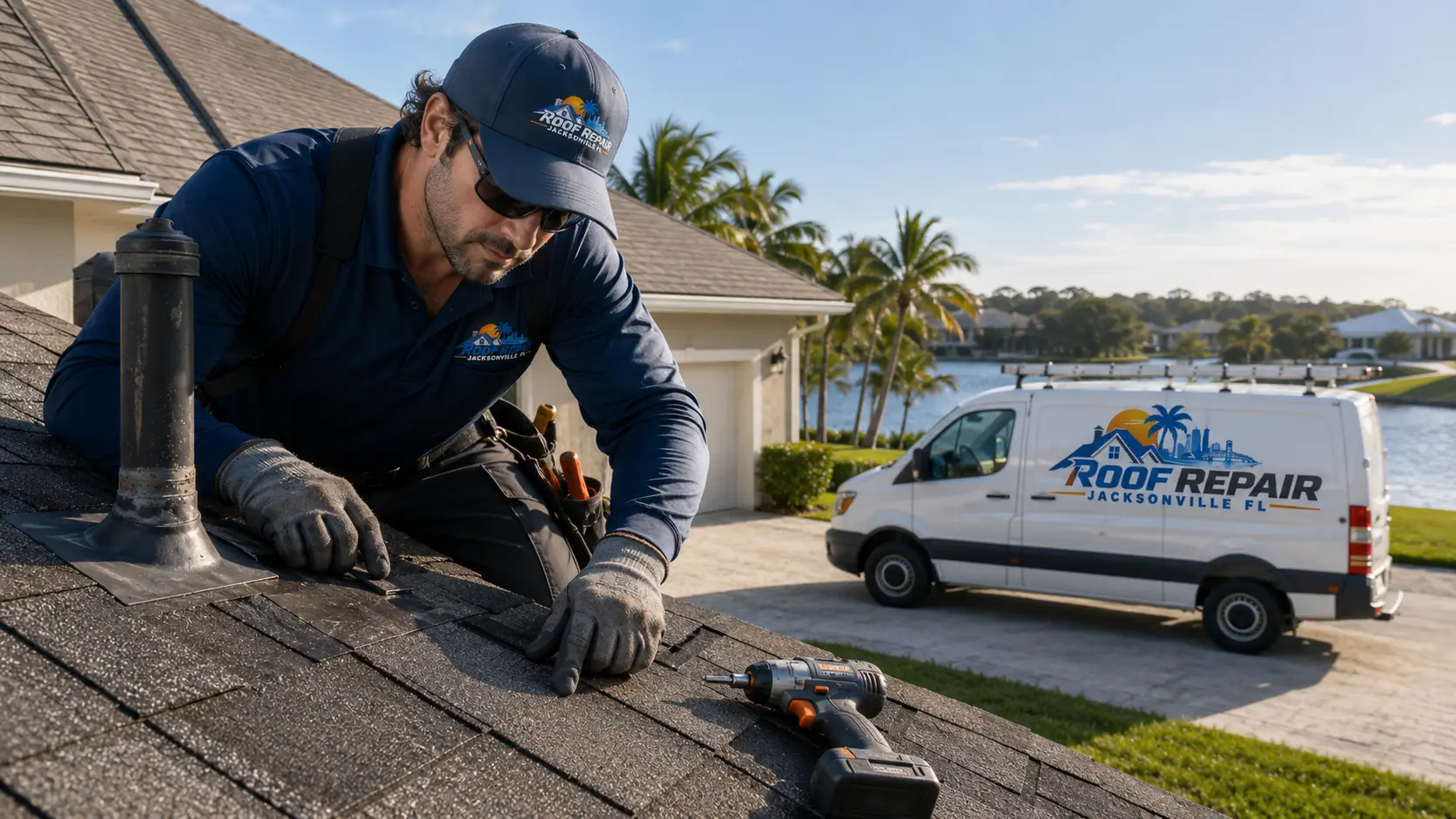
Leak traced to a roof vent
A ceiling stain traced back to a cracked collar at a roof penetration — one of the most common leak sources on Jacksonville roofs.
See the service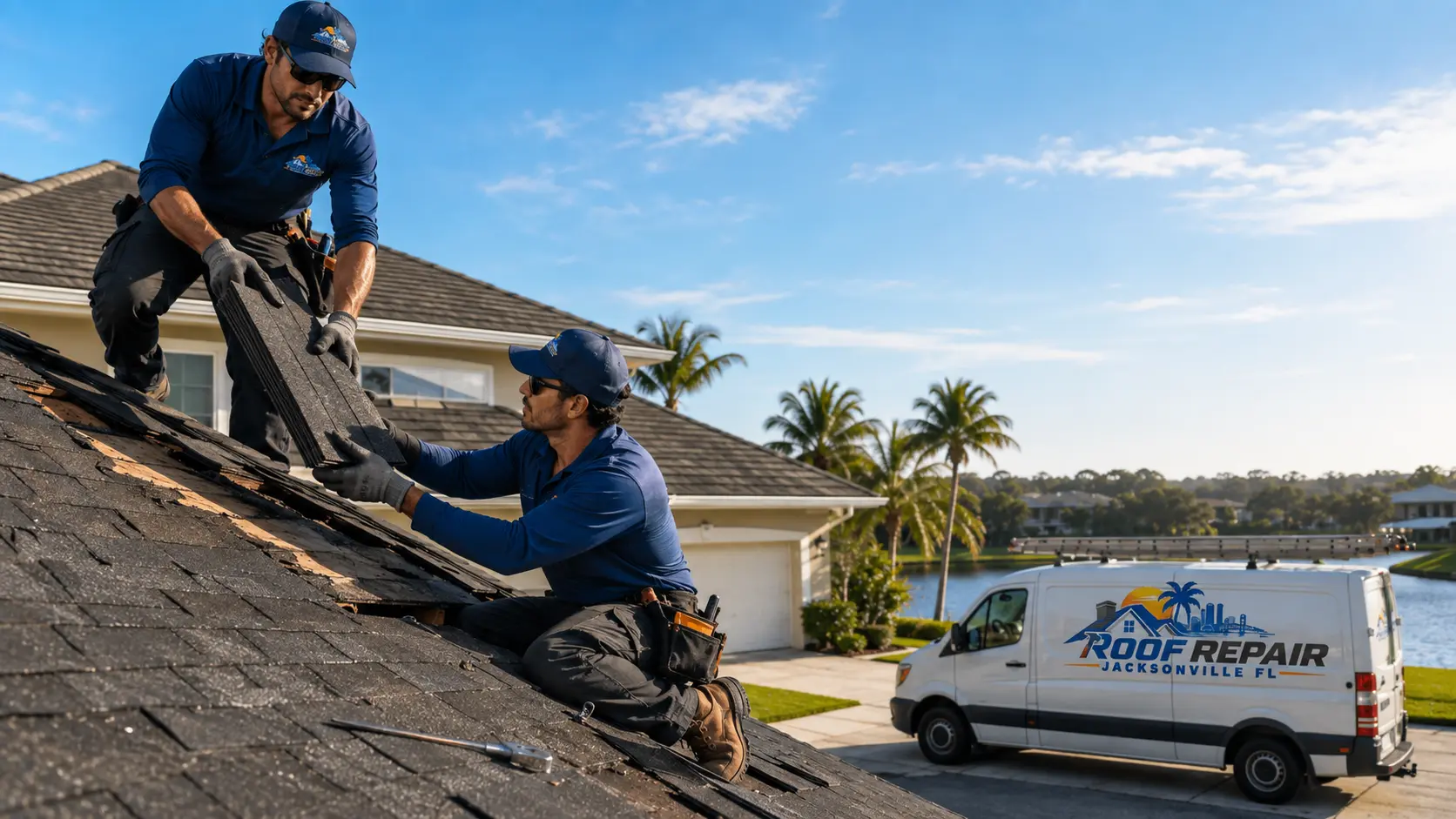
Wind-damaged shingle section
Shingles lifted and unsealed along an exposed slope after a wind event, replaced and re-secured before the next storm.
See the service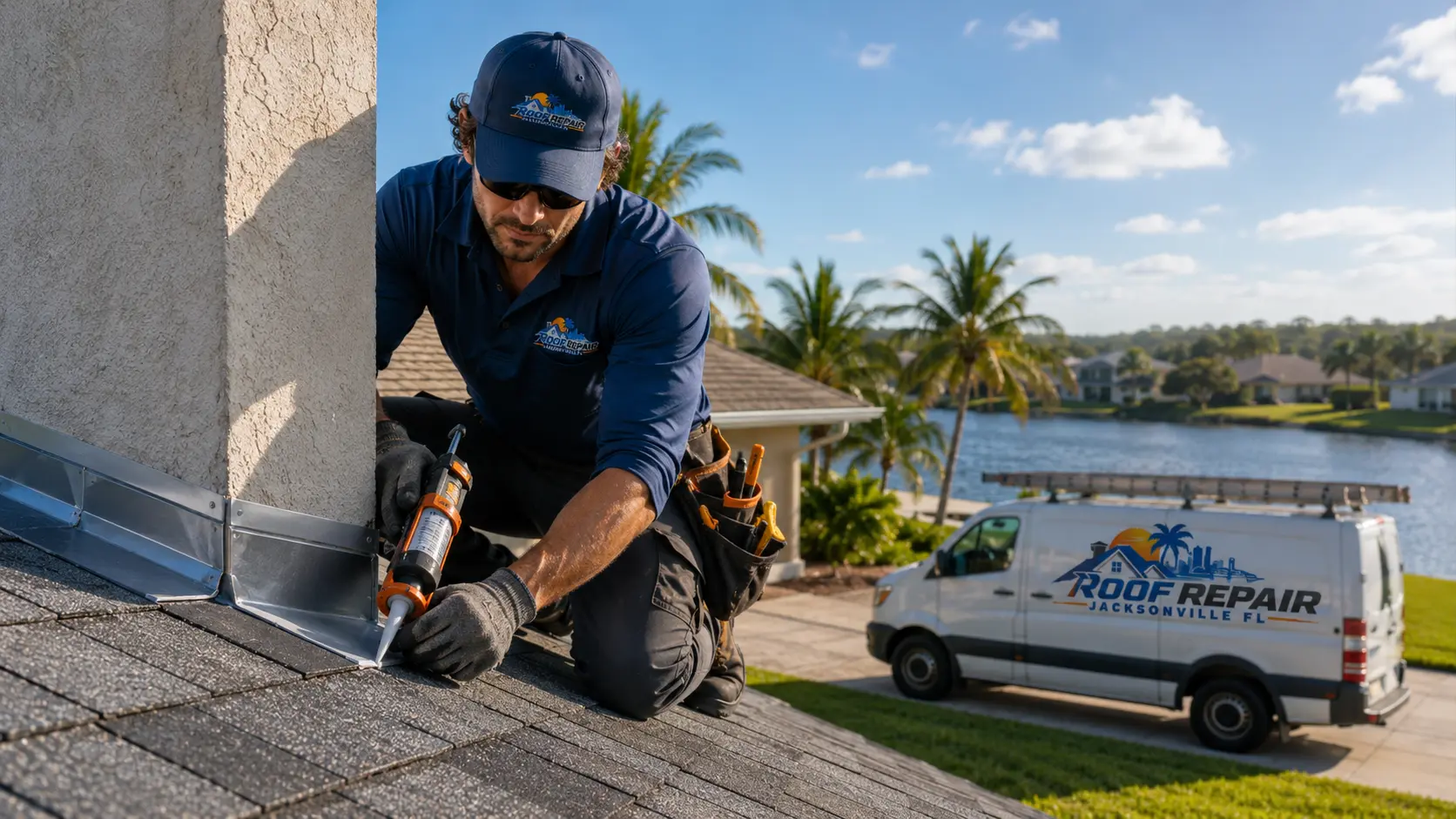
Chimney flashing failure
Water tracking down a chimney chase because counter flashing had loosened from deteriorated mortar and been sealed over instead of reset.
See the service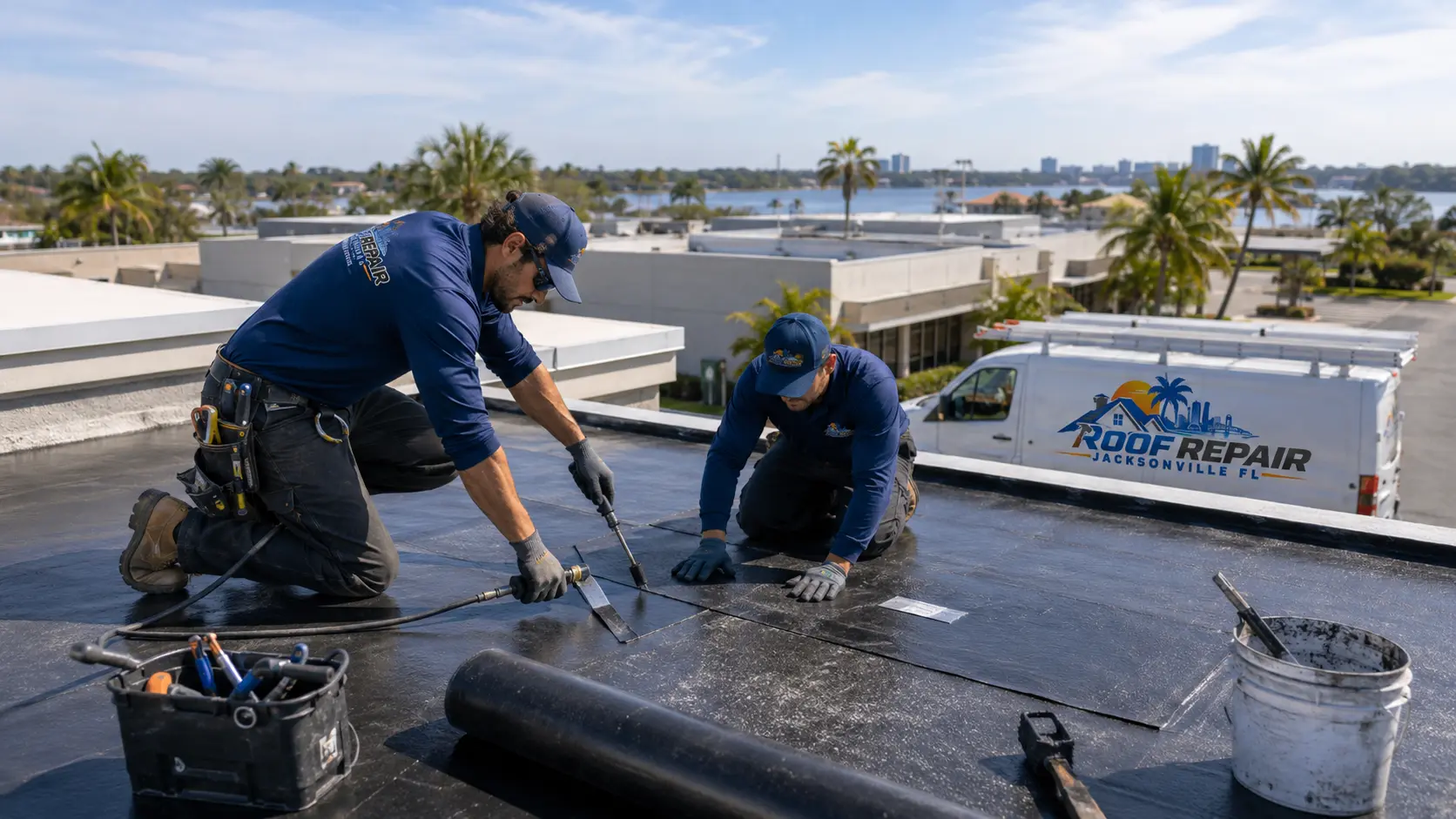
Low-slope seam and drainage issue
A flat section leaking at seams and terminations, with standing water indicating drainage that needed correcting as part of the repair.
See the service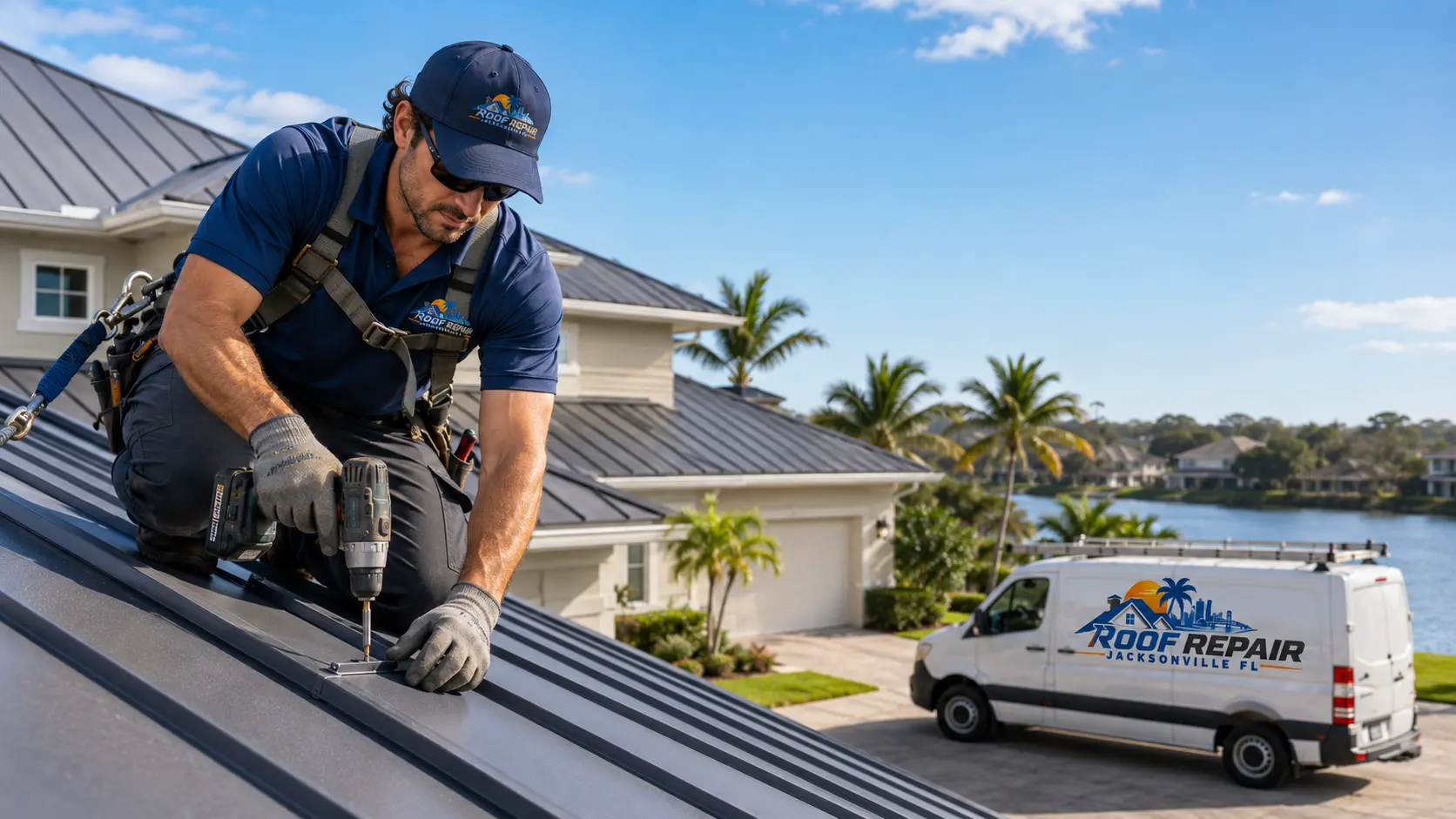
Metal roof fastener maintenance
Backed-out screws and degraded washers on an exposed-fastener metal roof, addressed with correctly sized fasteners and fresh sealant at penetrations.
See the service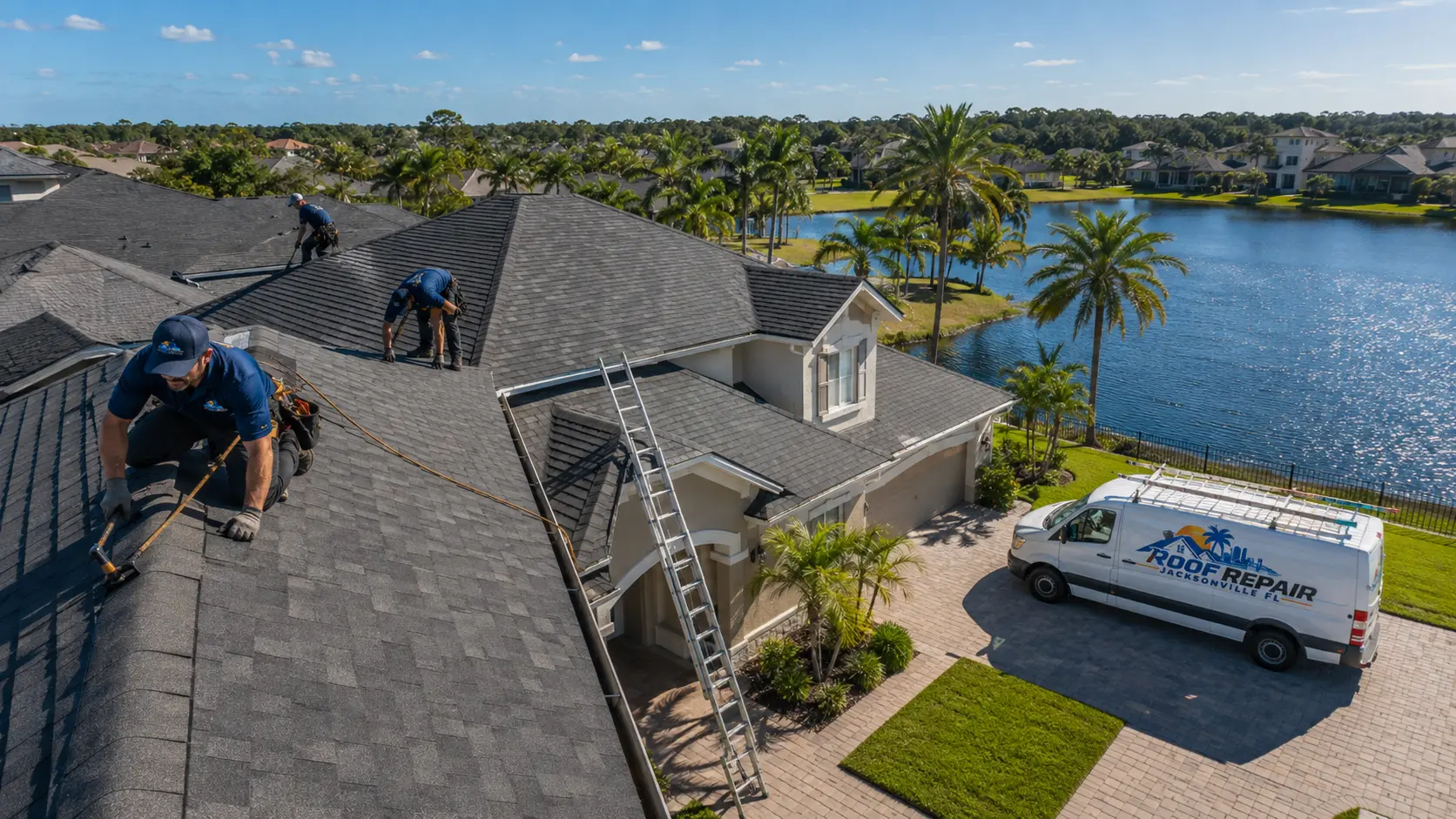
Post-storm roof assessment
A full-roof look after a tropical system, checking ridges, rakes, hips and penetrations for the damage that is not visible from the ground.
See the service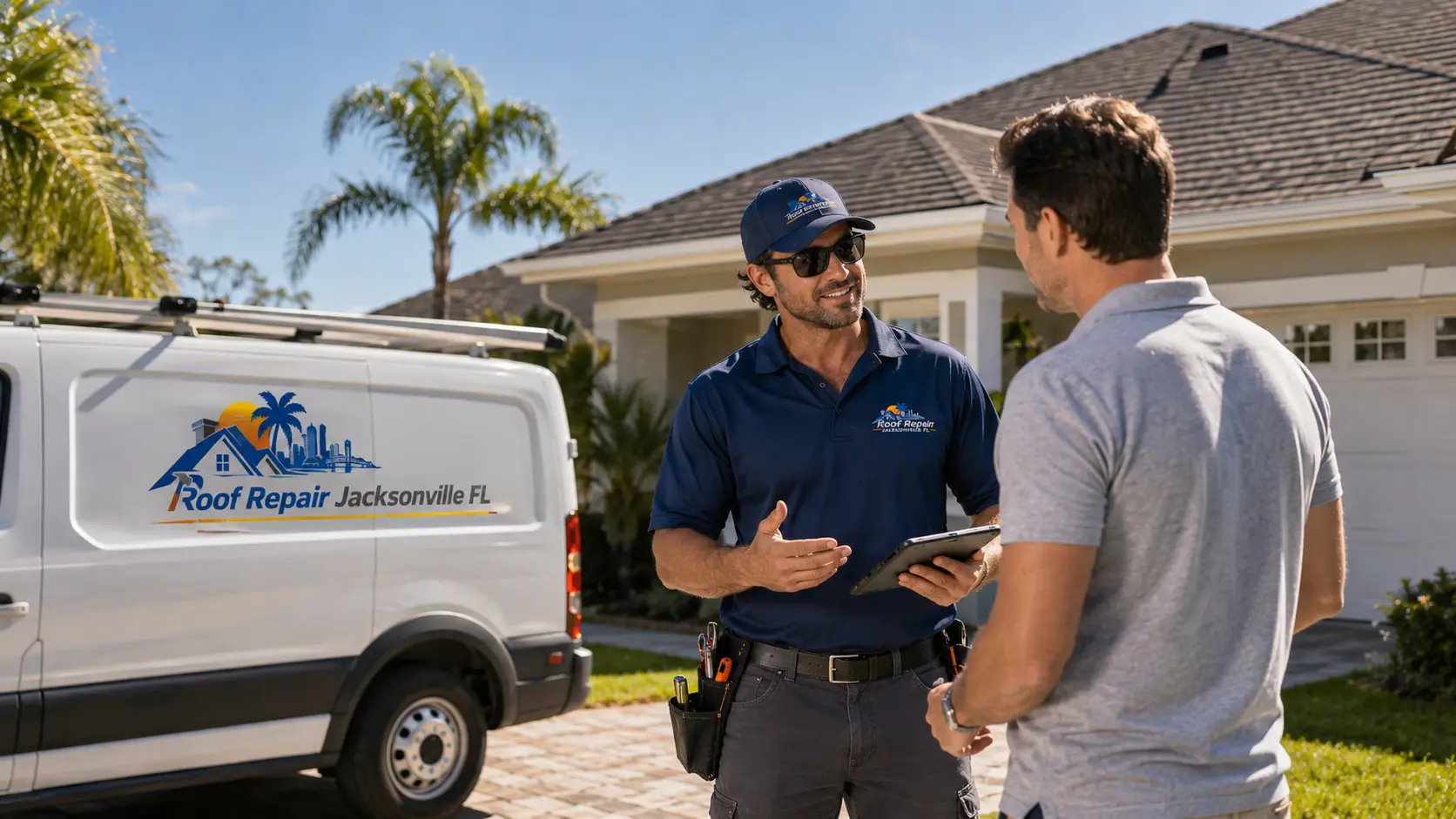
Repair-first consultation
Reviewing findings with a property owner and explaining why the problem was localized and what the repair would address.
See the serviceThe pattern behind most of these
Look across these situations and the same theme appears: roofs fail at their details. Penetrations, flashing, seams, fasteners, and drainage are where water gets in, and those components age faster than the covering around them — especially under Jacksonville sun, rainfall intensity, and coastal exposure.
That is also why so many of these are genuinely repairable. A roof with sound shingles and one failed detail does not need replacing; it needs that detail corrected properly. The cases that turn into larger work are usually the ones where a small problem was left alone long enough to wet the underlayment and decking beneath.
Recognize your situation here?
Describe what you are seeing and get a clear read on what is likely causing it.
Call for current availability.